Model
Use this graphical image to access detailed descriptions (metadata) of the available databases in the Envirofacts Warehouse. Click on a system name to access the available model and metadata for a database. Click on a system description to access the system overview.
Envirofacts has developed a RESTful data service API to all of its internal data holdings. This functionality provides a user of Envirofacts with the ability to query any table, available in the Envirofacts database model, through the use of a URL. For more information on the RESTful data service API, please visit the Services page.
Click on the system name to view the available data model.
Click here for narrative description of the flow chart.
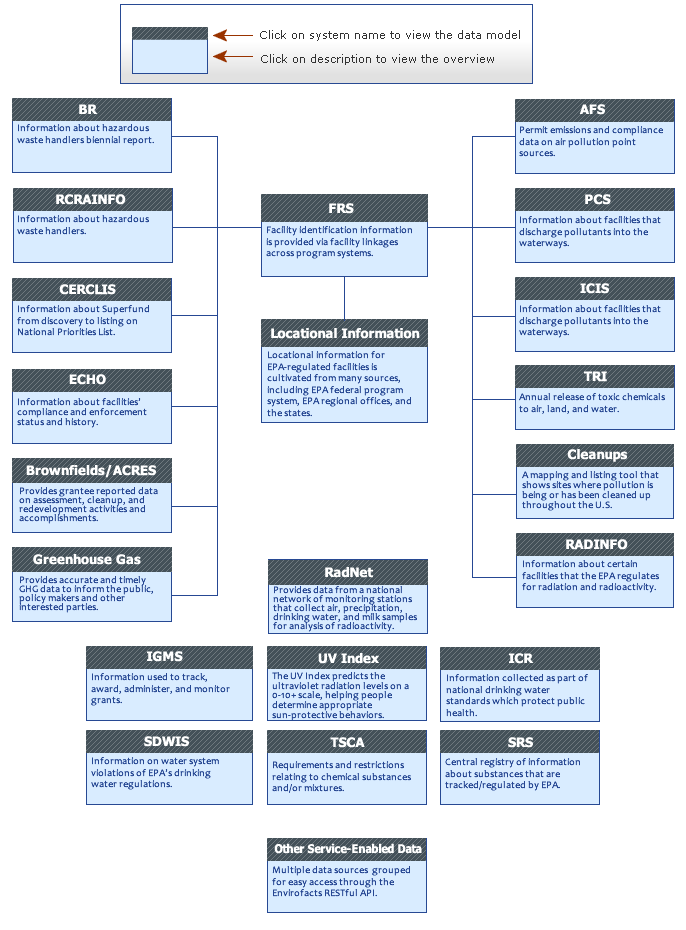
The following systems link to FRS:
AFS Overview |
AFS Model
Air Facility System (AFS) provides permit emissions and
compliance data on air pollution point sources.
BR Overview
|
BR Model
The Biennial Report is a national system that collects data
on the generation, management, and minimization of hazardous
waste.
Brownfields/ACRES Overview
Provides grantee reported data on assessment, cleanup, and
redevelopment activities and accomplishments.
CERCLIS Overivew |
CERCLIS Model
The Comprehensive Environmental Response, Compensation, and
Liability Information System provides information about
Superfund (cleaning/removal of hazardous waste) sites, from
discovery to their listing on the National Priorities list.
Cleanups Overview
Cleanups in My Community is a mapping and listing tool that
shows sites where pollution is being or has been cleaned up
throughout the U.S.
ECHO Overview
Enforcement and Compliance History Online provides
information about facilities' compliance and enforcement
status and history.
FRS Overview |
FRS Model
The Facility Registry System provides facility
identification information via facility linkages across
several program systems.
GHG Overview |
GHG Model
The program requires annual reporting of greenhouse gas
(GHG) data and other relevant information from large direct
emissions sources and suppliers of certain fossil fuels and
industrial gases in the United States.
ICIS Overview |
ICIS Model
The Integrated Compliance Information System provides
information about facilities that discharge pollutants into
the waterways.
Locational Information Overview |
LRT Model
Locational information for EPA-regulated facilities in
Envirofacts is cultivated from many sources, including EPA
federal program systems, EPA regional offices, and the
states.
PCS Overview |
PCS Model
The Permit Compliance System provides information about
facilities that discharge pollutants into the waterways.
RADInfo Overview |
RADInfo Model
The Radiation Information Database provides information
aobut certain facilities that EPA regulates for radiation
and radioactivity.
RCRAInfo Overview |
RCRAInfo Model
Resource Conservation and Recovery Act Information provides
information about nationwide hazardous waste handlers.
TRI Overview |
TRI Model
Toxics Release Inventory contains information about the
annual release of toxic chemicals to the air, land, and
water.
The remaining program systems in Envirofacts do not link to FRS:
ICR Overview
Information Collection Rule has information that was
collected as part of national drinking water standards which
protect public health.
RadNet Overview |
RadNet Model
Formerly, Environmental Radiation Ambient Monitoring System
(ERAMS), provides data from a national network of monitoring
stations that collect air, precipitation, drinking water,
and milk samples for analysis of radioactivity.
SDWIS Overview |
SDWIS Model
Safe Drinking Water Information System provides information
on water system violations of EPA's drinking water
regulations.
SRS Overview
Substance Registry Services is a central registry of
information about substances that are tracked/regulated by
EPA.
TSCA Overview
Provides information about chemical substances and/or
mixtures that are regulated by the Toxic Substances Control
Act.
UV Index Overview
The UV Index predicts the ultraviolet radiation levels on a
0-10+ scale, helping people determine appropriate
sun-protective behaviors.
Other Service-Related Data:
Design for the Environment